Designing the Architecture of a TTY with AppKit and Rust
, 655 words, 4 minutes read
At the time of writing, we are nearing the end of August 2026 and Opus 5 has gotten to a point where it seems to be quite good at writing code that works with a good harness; this does not necessarily mean it is good code, and I will always stand by the careful code written by a competent human, as we will always be the arbiters of maintaining worthwhile projects.
Couple days ago I was comparing the dependency count for building a terminal app UI in rust where I hand-rolled one with agentic assistance and compared it with a spinner from the r3bl project. ratatui pulls in over 300 dependencies and r3bl depends on about 88 crates. The simple hand-rolled version had a dep tree that was under 50 crates.
I saw someone joke online how we will start to see adverts played inside our IDEs and terminals and I decided it was time I distract myself by leaning into the madness, inspired by David Plummer’s writing a fully native Task Manager. It was impressive that he could go from a PRD (Product Requirement Document) to a useable piece of software.
The code is fully native: Direct2D/DirectComposition on Windows, UIKit on Mac, and Qt on Linux. The UI communicates with a shared CPP core, which branches out to platform-specific helpers. There’s NO electron, HTML, JSON, etc.
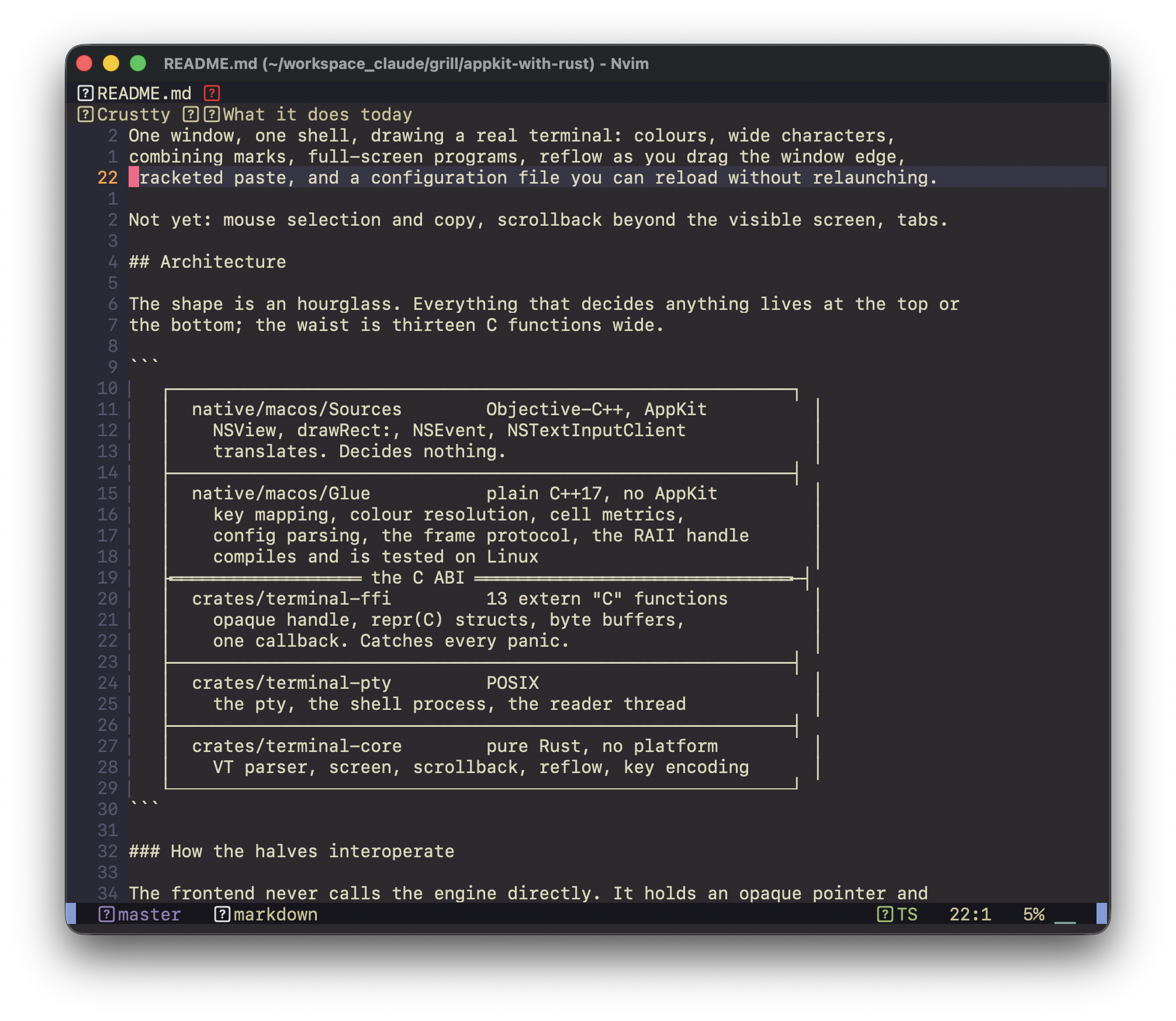
I was inspired by the “shared CPP core” and decided I wanted a Rust core interface through a C FFI and have Opus assist in teaching me through an extensive grill session. My role was to guide all the decisions and the layout of the code base, offering structure and playing to my strengths.
The grilling sessions made me aware how much my ignorance was ignorant of its own ignorance – some endearingly call these “unknown unknowns”.
The project is hosted at https://github.com/bsodmike/experimental-appkit-with-rust.
- Start with the README. This covers everything you need to get started on your local machine
- Running Claude in an isolated docker container
justcommands to run all the tests to build & runcrustty.
- blog articles generated based on the PRD & ADRs: https://github.com/bsodmike/experimental-appkit-with-rust/tree/master/blog-articles.
./docs: PRDs & ADRs live here.
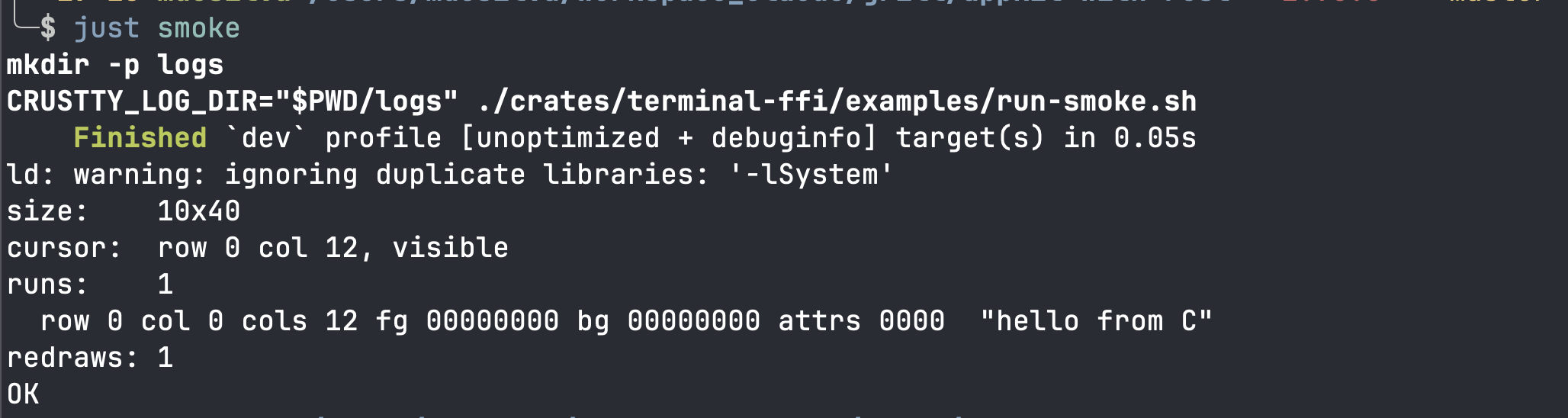
On the Mac side, here I’m running just smoke to test the C boundary
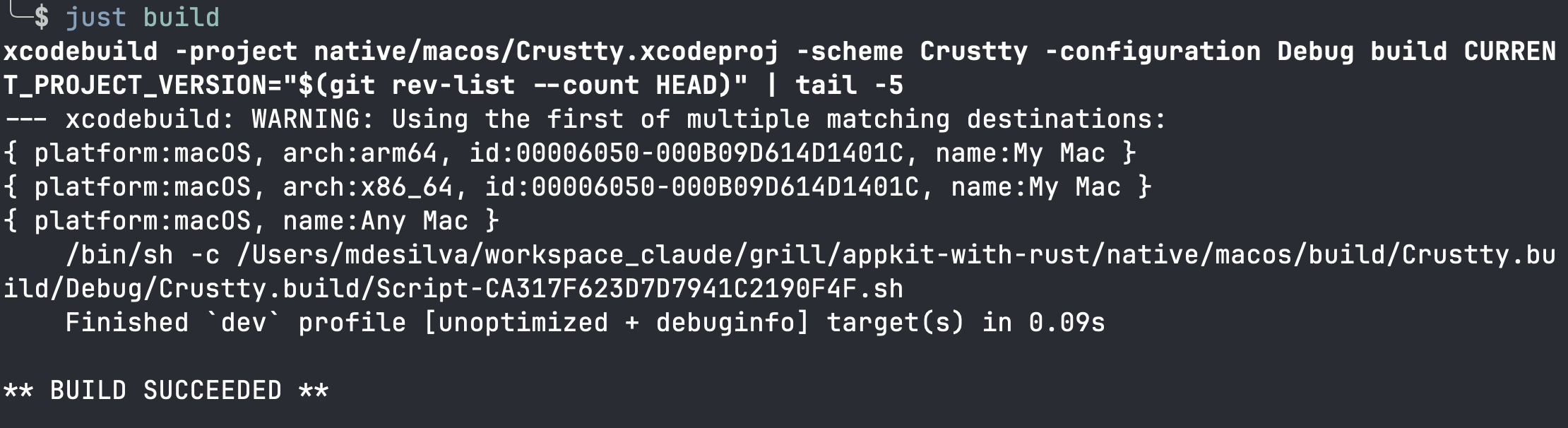
Running just build to build the AppKit frontend with XCode
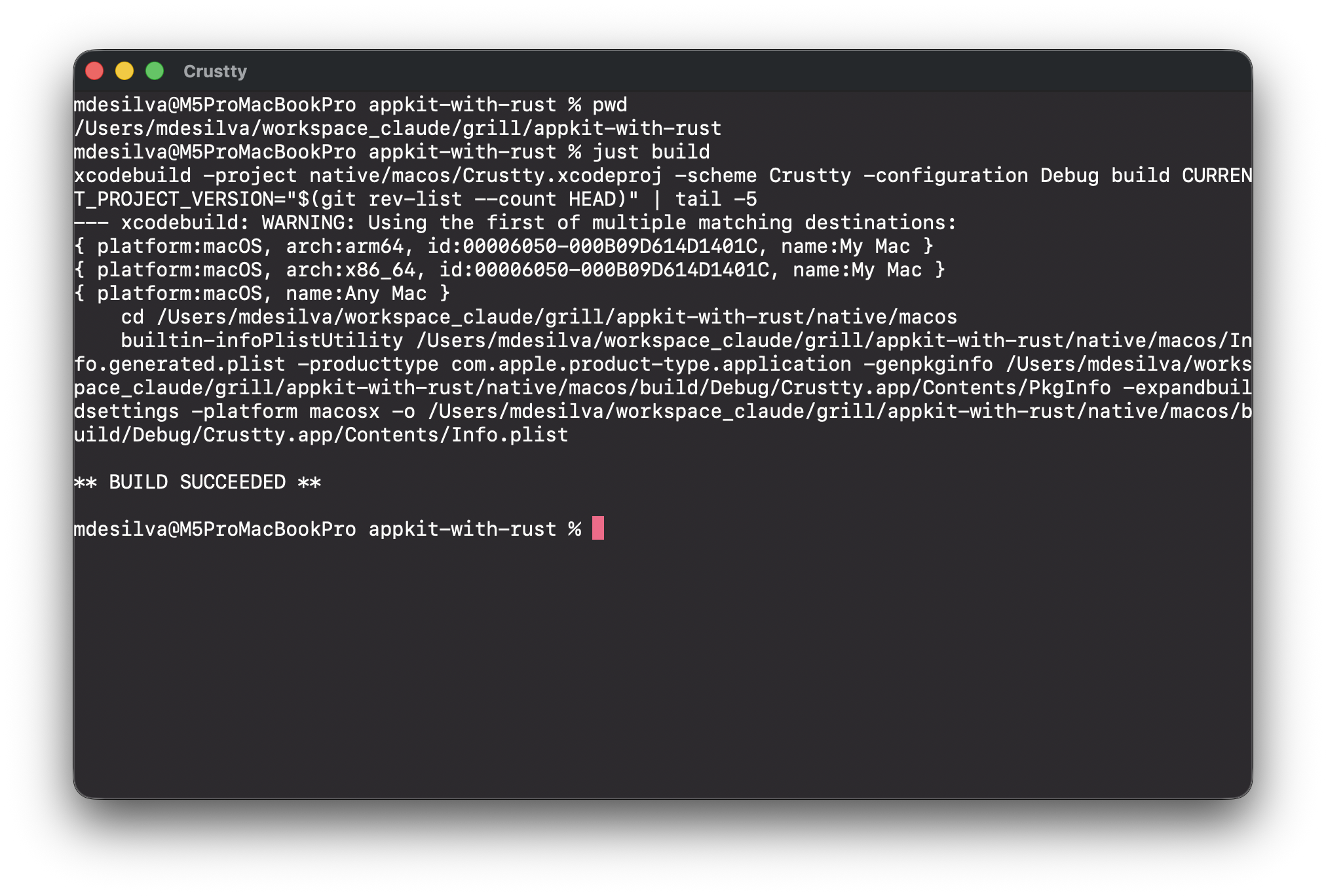
This is where it gets interesting. I’ve now run Crustty and I am building it inside the terminal!
Running nvim
Concluding thoughts
Anyone diving into the Github repository published should look at it more as a learning experiment, where we go through fundamentals derived from grilling sessions. I have assisted in detailing the PRD well enough to cover the rust core & FFI boundary, with the agent handling the waist and AppKit side of it.
Caveat: the AppKit code may not be the most ideal for maintainability, but this is an aspect that can be refactored in a secondary sprint.
The value I currently see with agentic models and how fast they are improving
- lean on compilers and tools to learn without being mislead.
- rapidly go from nothing to a binary that compiles and runs; it may not be error free, such as runtime panics etc.
- PRDs & ARDs aid with handovers between humans and agents alike – but they need to be maintained as well.